
Catsalyze's route to natural Vanillin
Fermentation makes natural vanillin — at a cost. Vanillin poisons the same cells that produce it, capping yields, and the biocatalyst rarely survives past one batch. We took the enzyme out, kept it working and gained back both.
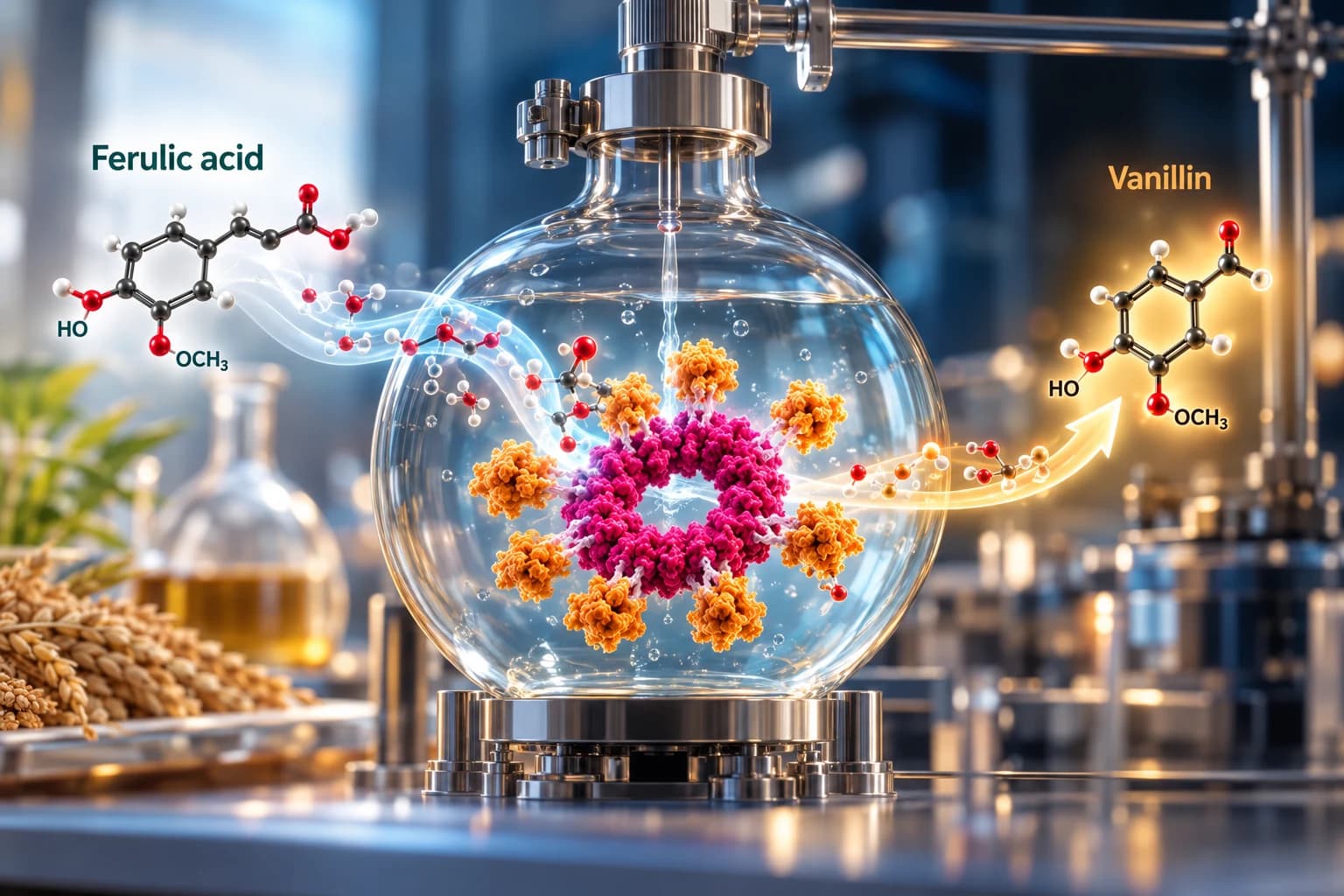
In microbial fermentation, vanillin itself is toxic to the producing strain, which limits substrate loading and final titers. Part of what's fed also goes to cell growth and maintenance rather than product, and side products cut into yield.
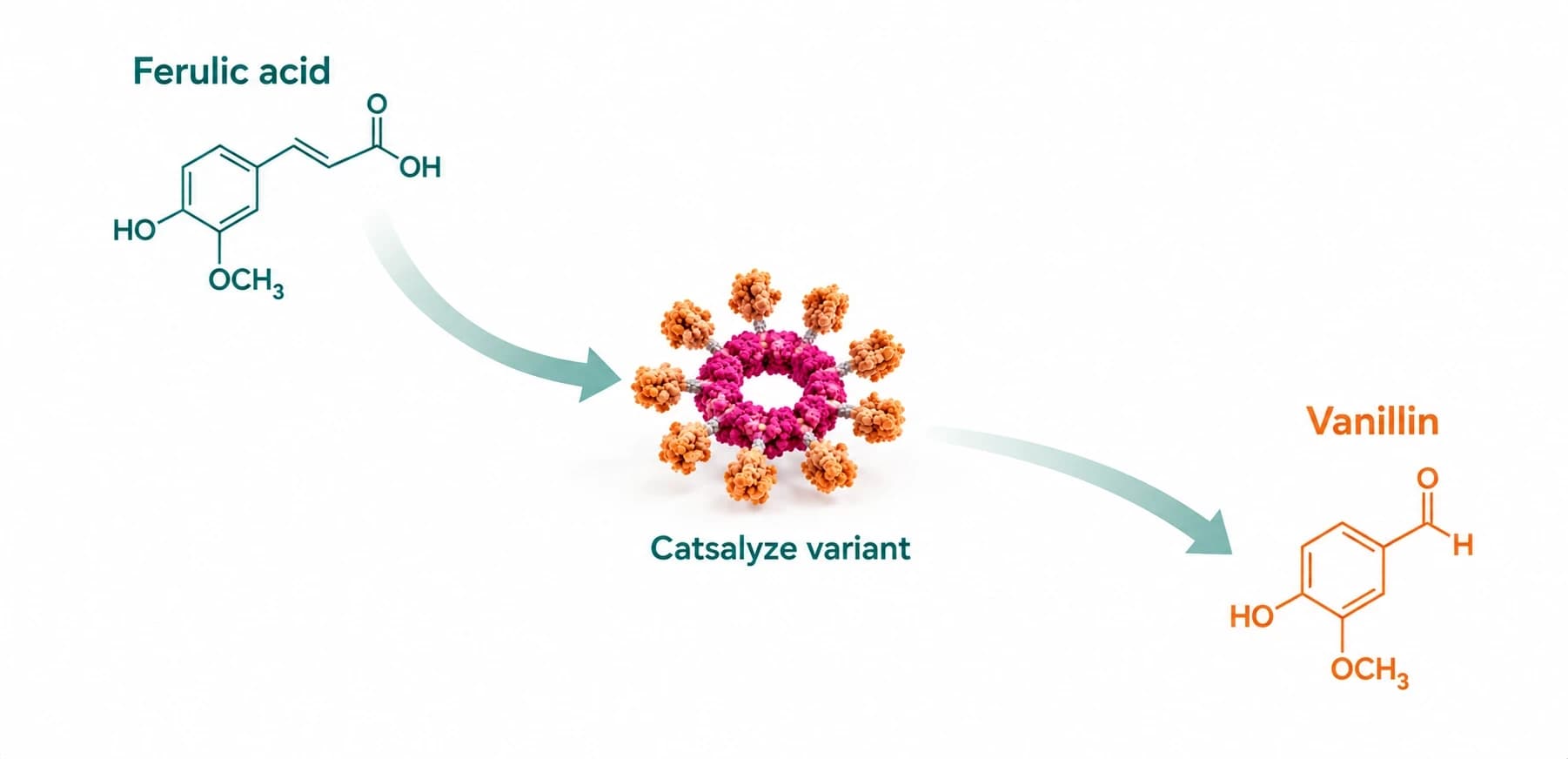
A single-step cell-free reaction, run by the enzyme displayed in multiple copies on our PRX scaffold — where the substrate has no destination other than product, and no cell to feed.
More product per unit of substrate, no biomass to feed or dispose of, and a scaffolded enzyme that stays stable and reusable across cycles.
The process
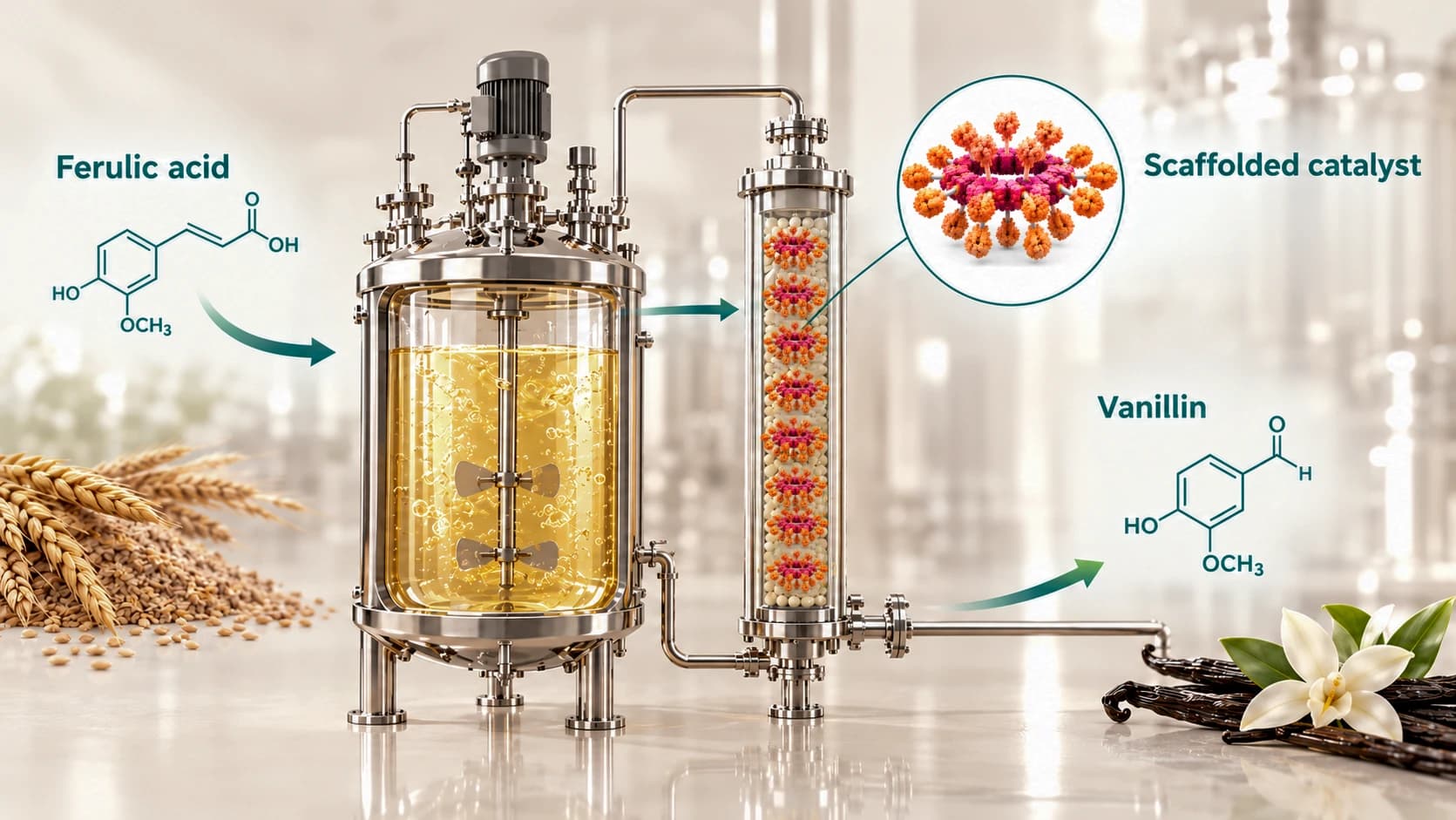
Bio-based substrate sourced from agricultural side streams.
Multiple copies of the enzyme are displayed on one large protein ring — packing more activity per particle, and easing catalyst recycling.
No cells, no biomass — just substrate and enzyme in mild aqueous conditions. Near-complete conversion to vanillin, and a catalyst easily recovered for reuse.
The vanillin stream moves straight into standard purification steps — the same lines already used for fermentation-derived vanillin, no new infrastructure required.
The same reasoning applies beyond vanillin
Wherever an enzymatic route is limited by substrate or cofactor cost, or by catalyst loss and inefficiency, scaffolding is worth exploring. We look at terpenes, chiral amines, rare sugars, and cosmetic actives, and evaluate the molecules our partners bring us for co-development, partnership or licensing.
Propose a molecule