
Our scaffolding technology
Screening, directed evolution and AI optimise individual proteins. Catsalyze focuses on what comes next: how proteins are organised in space. Our self-assembling scaffold controls protein number, proximity and orientation, providing a modular platform for designing multi-protein systems.
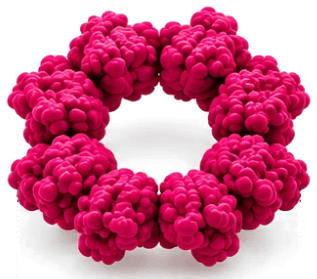
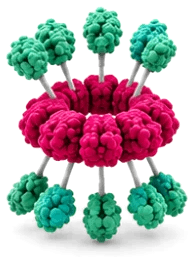
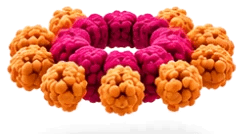
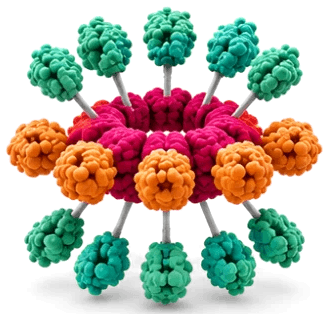
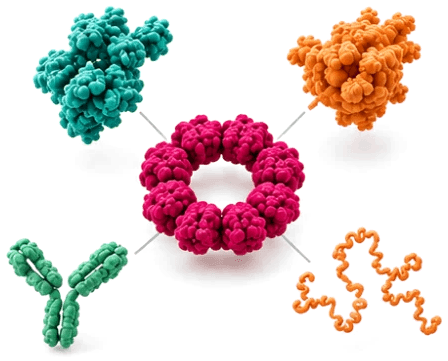
3 cargo-display strategies
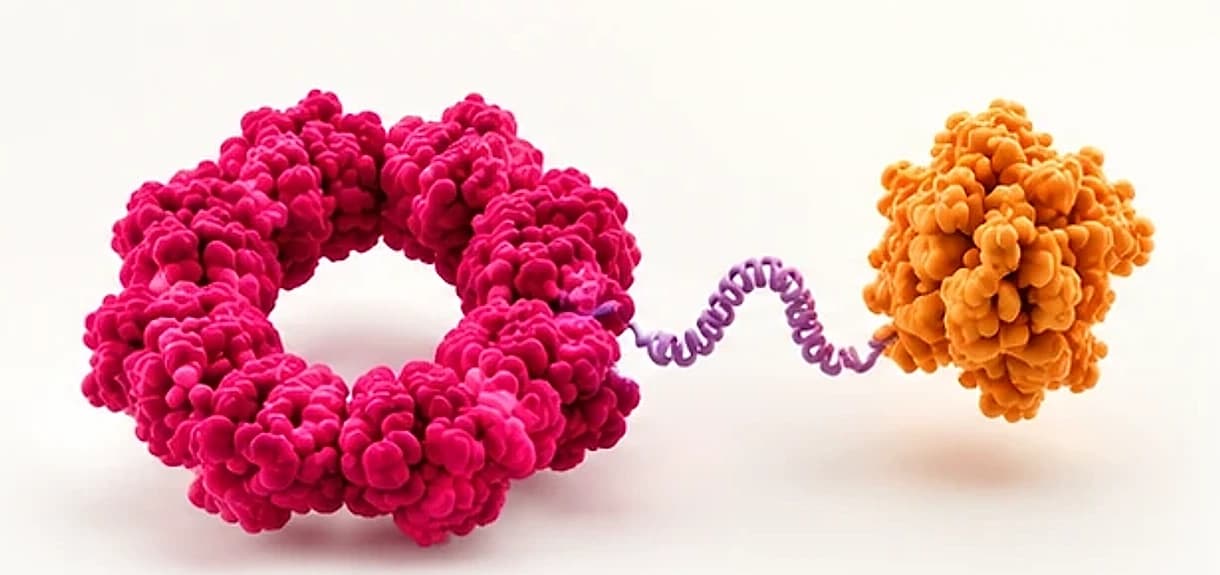
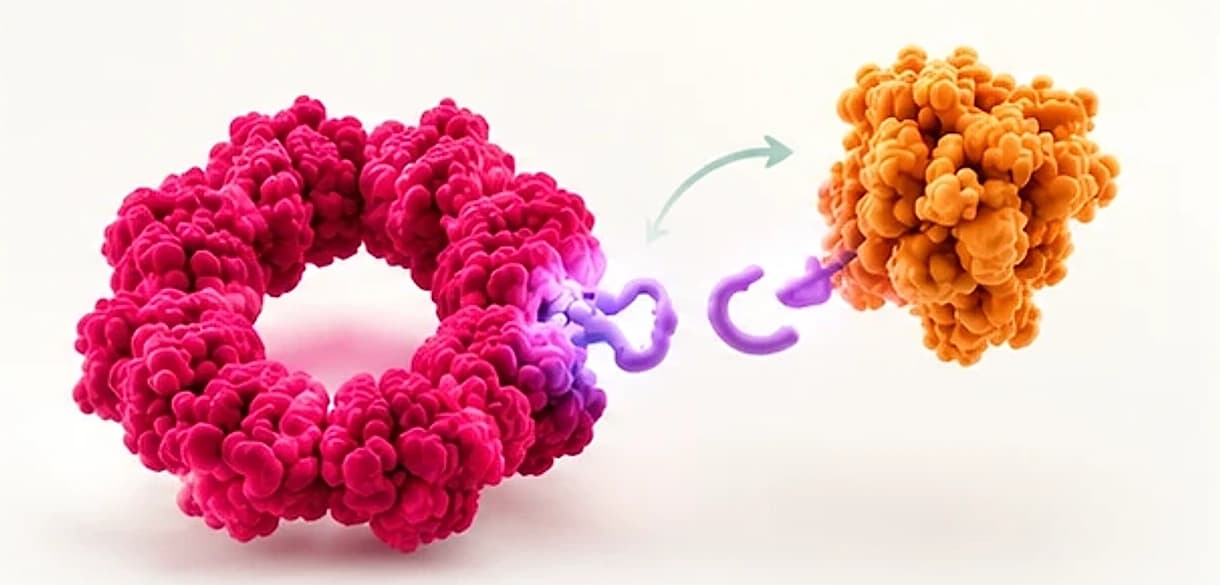
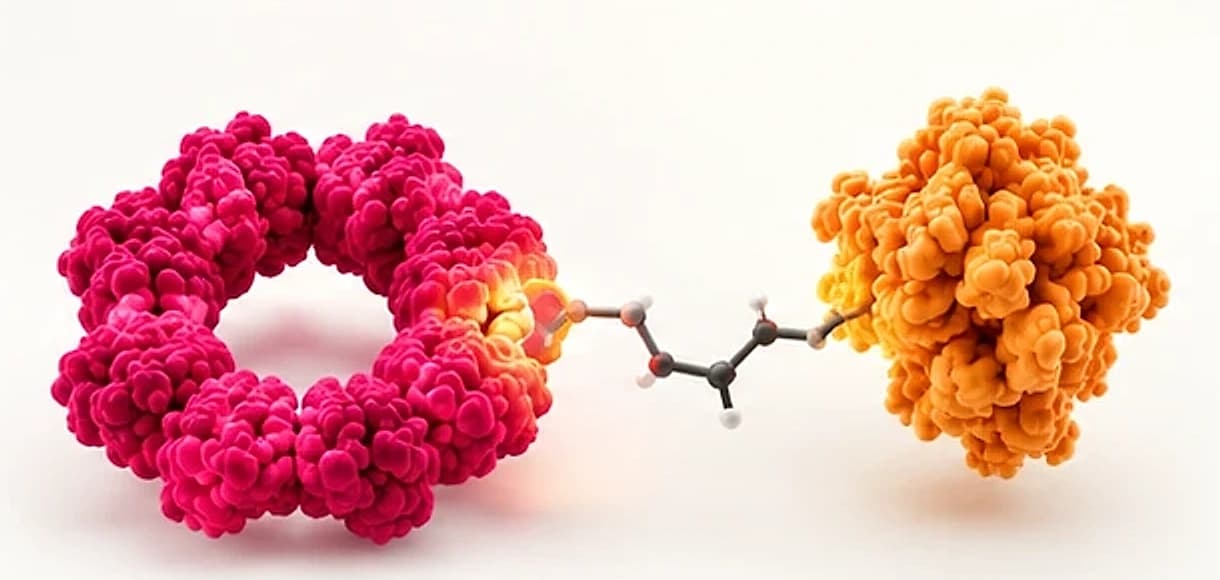
Genetic fusion, adapter–ligand binding, and chemical cross-linking. The optimal one is selected based on cargo properties, specificities, and the requirements of the target application.
Defined stoichiometry
Control the relative number of different proteins within the same assembly, enabling precise, tunable multi-protein compositions.
Stability & reuse
The scaffold's size and robust architecture withstand repeated use and storage, turning a single assembly into a durable, reusable tool rather than a one-shot reagent.
Co-localization
Combine different proteins on a single scaffold to create multifunctional systems, bringing together cooperating partners or complementary functions, such as target binding and signal reporting — an integrated design that free molecules in solution cannot readily achieve.
Avidity
Display multiple copies of the same binding partner at defined spacing to enhance overall binding through multivalent interactions.
Controlled orientation
Position proteins in a defined geometry to help maintain access to active sites and binding interfaces.
In the literature
Have a scaffolding project in mind?
Propose a project, discuss a licence, or order a ready-to-load, customized scaffold to test on your own target.